

Mood-Balancing Benefits for Cats to Improve Coat Health
Table of Contents
- How Stress Silently Ruins Your Cat's Coat
- Signs of Poor Coat Health in Cats (and What They Reveal About Mood)
- Natural Cat Coat Supplements That Support Both Mood and Fur
- How to Reduce Cat Anxiety During Grooming
- Environmental Enrichment as a Coat Health Strategy
- Age-Specific Nutrition for Coat and Mood Support
- Building a Daily Supplement and Grooming Routine
- Frequently Asked Questions
Last Updated: September 27, 2026
How Stress Silently Ruins Your Cat's Coat
Stress is the hidden driver behind many coat problems in cats, and its mood-balancing benefits are often overlooked. When a cat feels anxious, its body shifts resources away from skin and fur maintenance, and the coat is often the first place damage shows.
The Cortisol-Coats Connection
Cortisol is the hormone a cat's body releases during stress. High levels pull energy and nutrients away from the skin and hair follicles, showing up over time as a dry, brittle, or greasy coat.
Over-Grooming and Stress-Induced Alopecia
Anxious cats often over-groom, licking the same spot until fur thins or disappears, a pattern called stress-induced alopecia.
Signs of Poor Coat Health in Cats (and What They Reveal About Mood)
The clearest signs of poor coat health in cats are dullness, dryness, excessive shedding, and a rough or greasy texture, usually an underlying mood or nutrition problem, not a grooming one.
Watch for these signals:
- Dull, brittle fur that no longer shines
- Flaky skin or dandruff along the back
- Bald patches from over-grooming
- Constant scratching or biting at the coat
- A coat that feels greasy or clumped
Natural Cat Coat Supplements That Support Both Mood and Fur
The most effective natural cat coat supplements combine omega-3 fatty acids, high-quality protein, and mood-supporting nutrients that reduce the stress hormones driving coat damage. Together they support the skin barrier, calm inflammation, and lower the cortisol load that triggers over-grooming.
Omega-3 Fatty Acids and Skin Barrier Function
Omega-3 fatty acids, especially EPA and DHA, support skin hydration and calm inflammation, helping the skin barrier hold moisture to reduce flaking and improve coat texture. A common veterinary starting range is roughly 20-55 mg of combined EPA and DHA per kilogram of body weight daily, but the right amount depends on the cat's size, diet, and health, always confirm with your veterinarian first.
Protein Quality and Essential Amino Acids
Protein quality matters more than quantity. Cats need essential amino acids like taurine, arginine, and methionine for a lustrous coat. Taurine deficiency shows up as a dull, rough coat long before it affects the heart or eyes, which is why vets check it first when a coat goes flat.
Mood-Balancing Nutrients That Reach the Coat
This is where most guides stop, and where the real opportunity sits. Stress and coat health share a biochemical pathway: when cortisol stays elevated, blood flow to the skin drops, sebum production shifts, and the hair follicle cycle is pushed into a resting phase, causing shedding, dullness, and over-grooming that leaves bald patches.
A few nutrients support both ends of that pathway:
- L-theanine, an amino acid found in green tea, is widely used in feline calming supplements. It is thought to raise GABA and serotonin activity without sedation, which is why it shows up in products marketed for thunderstorm and travel anxiety.
- L-tryptophan is a precursor to serotonin (Checking your browser). Cats cannot synthesize it efficiently from diet alone, so it is often added to calming chews and prescription urinary diets.
- B-vitamin complex, especially biotin, niacin, and B12, supports both the nervous system and the keratin structure of the hair shaft. A cat low in B vitamins often shows a dull coat and low appetite at the same time.
- Magnesium and taurine work together on nerve signaling; taurine also happens to be the same amino acid the coat needs, which is why a single deficiency can show up as both anxiety and poor fur.
What to Skip
Skip supplements marketed only for "shiny coat" that list no omega-3 content, no named protein, and no amino acid breakdown, if the label doesn't say what's in it, the cat's body can't use what isn't there. Also skip human fish oil capsules unless your vet has calculated the dose, since EPA and DHA concentrations are often too high for a cat's body weight.
How to Reduce Cat Anxiety During Grooming
The best way to reduce cat anxiety during grooming is to go slow, keep sessions short, and pair the brush with something the cat enjoys. Forcing a session teaches a cat to fear it.
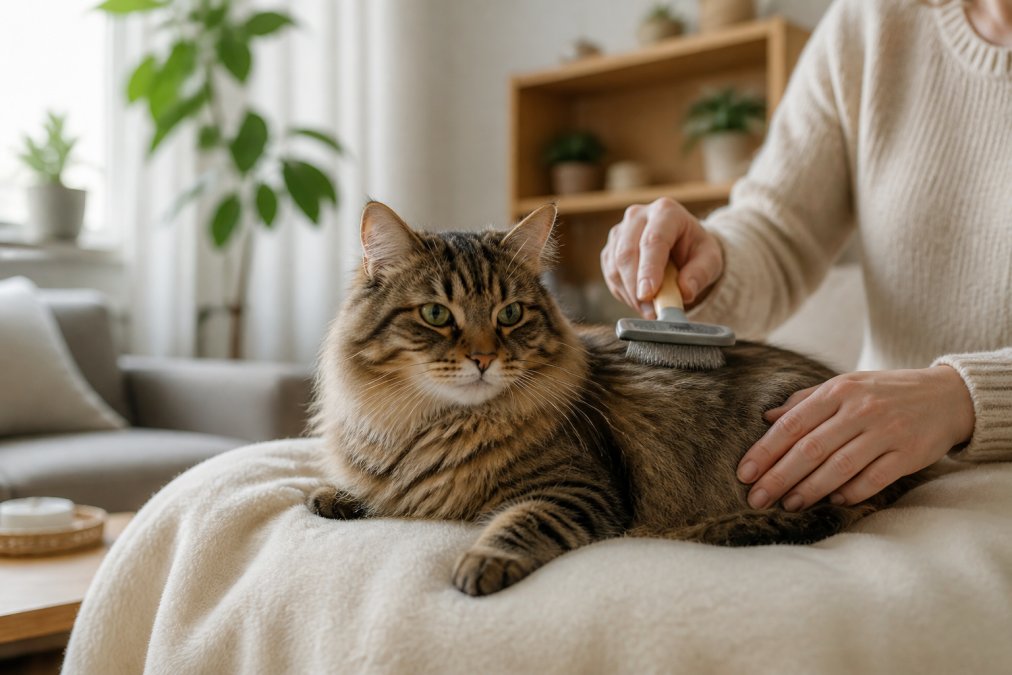
Follow these steps:
- Start with a soft-bristle brush and just one or two strokes.
- Pair every stroke with a treat or a calm word.
- Keep sessions under two minutes at first.
- Stop before your cat pulls away, not after.
- Build up gradually over several weeks.
Environmental Enrichment as a Coat Health Strategy
Environmental enrichment is an underrated coat health factor. A bored or stressed cat over-grooms, and enrichment reduces both.
Age-Specific Nutrition for Coat and Mood Support
Nutritional needs shift with age, and most guides ignore this. Kittens, adults, and seniors need different levels of protein, fat, and key nutrients for coat and mood, and the mood side changes just as much as the coat side.
| Life Stage | Protein Need | Key Coat Nutrients | Mood Focus |
|---|---|---|---|
| Kitten (under 1 year) | High, AAFCO growth minimums | Omega-3s (DHA for brain and skin), taurine, zinc | Play, social bonding, predictable feeding times |
| Adult (1-7 years) | Moderate to high | Omega-3s, amino acids, biotin | Routine, enrichment, stable household |
| Senior (7+ years) | High quality, highly digestible | Omega-3s, antioxidants (vitamin E, selenium), B12 | Comfort, low stress, warmth, easy access to resources |
Kittens: Building the Coat and the Brain at Once
Kittens need more fat than adults, and the type matters. DHA, the same omega-3 that supports skin barrier function, is also a structural component of the developing brain and retina, so a DHA-rich diet builds both a healthier coat and a more resilient stress response. AAFCO's growth profile sets the minimums; a named animal protein first is a good sign the amino acid profile is complete.
Adults: Maintaining the Balance
Adult cats are where most coat problems surface, usually because the environment changed, not the diet. A move, new pet, or new baby can push cortisol up without any nutritional cause. The fix is often a combination: keep the diet complete and balanced, add a marine omega-3 if the coat is dull, and address the stressor with enrichment or a calming nutrient.
Seniors: Absorption Changes Everything
Seniors absorb nutrients less efficiently, so protein quality matters even more. A senior may eat the same food for years and still develop a dull coat because the gut extracts less from it. Highly digestible protein, labeled as such or backed by a named muscle meat, makes a measurable difference.
A Note on Transitions
When switching to a life-stage-appropriate diet, transition over seven to ten days, mixing increasing amounts of new food into the old. A sudden switch can cause digestive upset that shows up as a dull coat within a week, the opposite of what you want.
Building a Daily Supplement and Grooming Routine
A simple daily routine beats an occasional deep clean, consistency improves coat luster and mood over time.
Try this schedule:
- Morning: Serve food with an omega-3 supplement mixed in.
- Evening: Two-minute grooming session with treats.
- Daily: One short play session with a wand toy.
- Weekly: Rotate toys and check the coat for changes.
Frequently Asked Questions
What can I give my cat to improve his coat?
Omega-3 fatty acids from fish oil or algae support skin barrier function and coat luster. Protein quality matters too, so choose foods with named animal proteins as the first ingredient. Natural cat coat supplements that combine omega-3s with antioxidants can reduce skin inflammation and support nutrient absorption. Always introduce new supplements gradually over 7-10 days and check with your veterinarian before starting anything new, especially if your cat takes medication.
Can stress affect a cat's coat health?
Yes. Elevated cortisol levels from chronic stress disrupt skin barrier function, slow hair regrowth, and trigger over-grooming that leads to bald patches and stress-induced alopecia. Cats in multi-cat households or those with disrupted routines are especially vulnerable. Addressing the stress source, whether through environmental enrichment, consistent routines, or mood-balancing products, can help improve coat texture.
What are the signs of poor coat health in cats?
Watch for dull or greasy fur, excessive shedding, dandruff, bald patches, rough texture, or a coat that feels unusually dry. These signs often point to nutritional gaps, dehydration, or underlying stress. If your cat's coat changes suddenly or comes with itching, weight loss, or behavior shifts, see your veterinarian to rule out medical causes before trying supplements.
How often should I use mood-balancing grooming products on my cat?
Most botanical grooming serums and balms work best with 2-3 sessions per week. Start with one short session and watch how your cat responds. If she tolerates it well, increase gradually. Pair grooming with calm, low-traffic times of day. For anxious cats, keep sessions under 5 minutes at first. Consistency matters more than duration, and a predictable routine helps reduce grooming-related stress over time.
Coat problems rarely have a single cause. Stress, nutrition, and grooming habits all feed into each other, and fixing one without the others rarely holds. Feline Grove was founded by a biochemist to make this easier, with mood-balancing balms, grooming serums, and scientist-developed botanical toys built for real feline behavior. Get started with Feline Grove and give your cat the calm, healthy coat that comes from care designed around how cats actually feel.